
Balancing pH Levels in the Root Zone for Cannabis Cultivation
Maintaining proper pH in the root zone is critical for nutrient absorption and overall plant health. Cannabis growers may overlook this important factor, leading to nutrient lockout and poor yields. Below, we explore why pH matters, how water, substrates, and fertilizers influence it, and common mistakes to avoid.
Ideal pH Range
pH determines nutrient solubility and microbial activity in the root zone. When levels drift outside the ideal range, plants cannot absorb essential elements efficiently. This imbalance often results in deficiencies, stunted growth, and reduced cannabinoid production.
Cannabis thrives in a root zone pH between 5.8 and 6.5. This range ensures maximum nutrient availability and supports vigorous growth. Hydroponic systems often require tighter control, while soil offers natural buffering.
High substrate pH above 6.5 decreases micronutrient availability and often causes iron (Fe) deficiency. Growers must also monitor low pH, which reduces root growth and increases micronutrient availability, leading to iron, manganese, or boron accumulation.
Low pH in the cannabis root zone creates significant challenges for plant health and nutrient balance. Acidic conditions below 5.5 increase the solubility of certain micronutrients, often leading to toxic accumulation of iron, manganese, and boron. Excessive uptake of these elements can damage roots and impair physiological processes. Additionally, low pH reduces calcium and magnesium availability, weakening cell structure and overall plant vigor. Prolonged exposure to acidic conditions also restricts root growth, limiting water and nutrient absorption.
Water Quality Considerations
Water quality significantly impacts pH stability. It is the highest input for cannabis growth. High bicarbonate levels or dissolved salts can raise pH, requiring acidification before irrigation. Reverse osmosis systems help remove excess minerals, providing a clean base for nutrient solutions. Water quality changes with its source. Water sources are derived from well water, municipal water, or surface water.
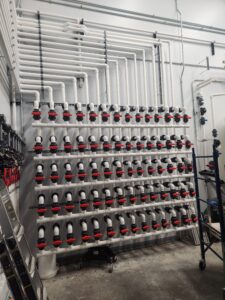
Well water often contains high bicarbonates, calcium, and magnesium. These raise substrate pH and reduce iron availability. To neutralize alkalinity, growers can use acidic fertilizers, acid injection, or reverse osmosis.
Municipal water usually has fewer dissolved elements than well water. However, treatment adds chloride and fluoride, which may burn leaf margins. If chloride or fluoride levels are high, install filters to reduce them.
Surface water generally contains fewer dissolved elements. Growers should test its composition to ensure enough calcium and magnesium. Additionally, protect surface water from herbicide runoff and pollution to prevent plant damage.
Plants grown in containers have restricted root masses, making them highly sensitive to the low buffering capacity of soilless substrates. Therefore, regularly monitor irrigation water to prevent nutrient imbalances and avoid inhibiting plant growth. Always test water regularly to prevent unexpected fluctuations.
Substrate Influence on pH Levels
Different substrates affect pH differently:
- Coco Coir
- Effect: Coco coir tends to retain salts and can cause gradual pH drift if not properly buffered.
- Key Consideration: Requires frequent monitoring and flushing to maintain stability.
- Rockwool
- Effect: Rockwool is inert, meaning it does not buffer pH. The root zone pH depends entirely on the nutrient solution.
- Key Consideration: Precise control of irrigation pH is essential.
- Soil
- Effect: Soil has natural buffering capacity, which helps maintain stability. However, microbial activity and fertilizers can shift pH gradually.
- Key Consideration: Regular testing is still necessary, especially in container-grown plants.
- Perlite
- Effect: Perlite is inert and does not influence it significantly.
- Key Consideration: Used as an aeration amendment – depends on other components in the mix.
- Hydroponic Systems
- Effect: No buffering capacity; acidity/alkalinity changes rapidly based on nutrient solution and plant uptake.
- Key Consideration: Requires constant monitoring and adjustment.
Choose substrates that match your cultivation style and monitoring capabilities.
Fertilizer Impact
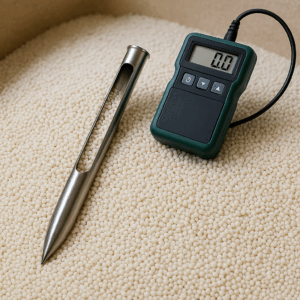
Fertilizers alter pH through their chemical composition. Ammonium-based nitrogen lowers pH, while nitrate-based nitrogen raises it. Phosphates and sulfates also influence acidity. Always check solution pH after mixing nutrients and adjust before feeding plants.
Monitoring and Adjustment
Use calibrated pH meters for accurate readings. Adjust pH gradually with safe acids or bases to avoid shocking roots. Consistent monitoring prevents fluctuations that stress plants. Record trends to identify patterns and anticipate corrections.
Best Practices for Stability
Combine high-quality water, balanced fertilizers, and substrates to create a stable root zone environment. Next, implement regular testing of water, nutrient solutions, and substrate levels to catch problems early. Additionally, maintain detailed logs of readings and adjustments to track trends and prevent recurring issues. These preventive measures save time, reduce stress on plants, and protect yields from costly nutrient imbalances.